Best Neighborhoods to Rent in Milwaukee in 2026: A Renter's Guide by Lifestyle
Milwaukee is a city of neighborhoods, and that is not just a marketing phrase. The difference between living on the East Side and living in Bay View, between Riverwest and the Third Ward, is not just a few miles on a map. It is a completely different daily life. Different energy levels, different commute patterns, different coffee shops, different rent checks. If you are searching for an apartment in Milwaukee right now and you are not sure where you actually want to land, this guide was written for you. We break down every major neighborhood by what it genuinely feels like to live there, not just the numbers.
Milwaukee's rental market in 2026 is one of the most compelling value propositions in the Midwest. The city runs 33 percent below the national average rent, which means your housing dollar stretches significantly further here than in Chicago, Minneapolis, or any coastal market. But not all of Milwaukee is equally affordable, and not all of it is equally right for every renter. The neighborhood you choose matters more than almost any other decision in your Milwaukee apartment search.
Find Your FitWhich Milwaukee Neighborhood Matches Your Life?
Before diving into each neighborhood in depth, here is a quick reference to point you in the right direction based on how you actually live. Find yourself in this list, then read the full section on your match.
If you want to step out of your apartment and have everything within a fifteen-minute walk, the East Side delivers that better than anywhere else in Milwaukee. Brady Street is the neighborhood's spine, running from the Milwaukee River down toward Lake Michigan with independent restaurants, coffee shops, bars, and boutiques packed into a stretch that never feels like a chain-store strip mall. This is the neighborhood that draws people from across the city on weekends, and if you live here you are already there.
The East Side sits close to UW-Milwaukee, which gives the neighborhood a consistent energy of younger residents, academics, and creative professionals. Housing stock leans heavily toward older, character-rich apartment buildings with high ceilings and original woodwork that newer construction simply cannot replicate. Walkability scores here are among the highest in the city, and Lake Michigan beaches are genuinely minutes away on foot or by bike.
The one honest drawback is parking. Street parking on the East Side is competitive and requires patience, especially on evenings and weekends. If you are moving from somewhere that required a car for everything, the East Side is the one Milwaukee neighborhood where you might genuinely consider leaving it behind. The bus network here is solid and biking is a real daily option.
Bay View is the neighborhood that Milwaukee renters tend to move into and never want to leave. It has a sense of place that is genuinely rare in a city of this size. The main commercial corridor along Kinnickinnic Avenue, or KK as everyone calls it, is full of independent restaurants and bars that have been there for years rather than months, owned by people who live in the neighborhood, serving regulars who walk from two blocks away. There is a food and drink culture here that quietly outpunches the East Side.
South Shore Park sits directly on Lake Michigan and gives Bay View residents some of the best free waterfront access in the city. The 73-acre Humboldt Park brings the same energy inland, with trails, community events, and an ice skating rink in winter that becomes a gathering point for the whole neighborhood. Green space is genuinely abundant here in a way that surprises people who do not know the area.
Bay View draws a broad mix of renters, from young professionals and artists to families who have been in the neighborhood for decades. That diversity gives it a stability and authenticity that newer, more gentrified neighborhoods often lack. Housing ranges from classic brick cottages and Tudor-style buildings to more modern apartments, giving renters a variety of options across different price points.
The Third Ward is Milwaukee's most premium rental neighborhood and its price tag reflects it. Converted 19th-century warehouse buildings line the streets, offering loft-style apartments with exposed brick, high ceilings, and industrial details that have become the defining aesthetic of upscale urban living. The Milwaukee Public Market anchors the neighborhood's food culture, and the RiverWalk runs directly through it, giving residents a genuine urban waterfront experience year-round.
This is where young professionals in tech, design, finance, and creative industries tend to cluster. Coworking spaces are embedded throughout the neighborhood, walkability to downtown corporate offices is exceptional, and the social scene centers around a mix of upscale bars and destination restaurants that draw visitors from across the metro. If you are working downtown and want to live somewhere that feels intentionally curated, the Third Ward delivers that at a consistent level.
The honest conversation about the Third Ward is the cost. At over $2,250 per month for a one-bedroom, this is Milwaukee at its most expensive. If your budget is flexible and proximity to downtown work and premium amenities is the priority, the value proposition holds up. If you are watching your budget, Bay View, the East Side, or Riverwest will give you a genuinely good Milwaukee life at a fraction of the cost.
Riverwest does not try to be anything other than what it is, and that is exactly its appeal. This is Milwaukee's DIY neighborhood, home to housing cooperatives, community gardens, local breweries, and a creative community that has actively resisted the kind of rapid gentrification that has changed the character of comparable neighborhoods in other cities. The people who live in Riverwest are there intentionally and that collective intentionality creates an energy you can feel walking down Locust Street on a Saturday afternoon.
The Milwaukee River forms the neighborhood's western boundary and gives residents access to trails and green space that connect directly to other parts of the city. The arts and music community here is strong and deeply embedded. Local venues, galleries, and creative collectives are part of the daily fabric rather than an afterthought. If cultural life matters to you as much as square footage, Riverwest punches well above its price point.
The affordability relative to the quality of life is one of Riverwest's defining characteristics. At around $1,250 per month for a one-bedroom, you are getting genuine neighborhood character and community for significantly less than the East Side or Third Ward. The trade-off is that Riverwest's commercial corridor is more eclectic than polished, which is the point for the people who love it but worth knowing if you are expecting the same restaurant density as Bay View.
Walker's Point is the neighborhood that has changed most dramatically in Milwaukee over the past several years and the change has been overwhelmingly positive. What was once a largely industrial zone has become the city's undisputed food capital. The restaurant density on South Second Street and the surrounding blocks rivals anything in the metro area, with a concentration of chef-driven independent restaurants that have earned Walker's Point a reputation well beyond Milwaukee.
The neighborhood sits directly south of downtown and has benefited from Milwaukee's broader investment in water technology and creative industries. New apartment developments have come online along the river, and the neighborhood now offers a mix of converted industrial spaces and newer construction that gives renters more options than most Milwaukee neighborhoods at this price point. The Deer District and Fiserv Forum are a short walk or bike ride away, which makes Walker's Point one of the better locations for Bucks fans and concert-goers.
Walker's Point is still in an active transition period, which means the neighborhood has the texture of somewhere still becoming rather than somewhere arrived. That is either an exciting quality or a reason to wait, depending on your tolerance for a neighborhood that does not yet have everything fully settled. The food alone is worth the rent for the right renter.
Shorewood and Wauwatosa are not technically Milwaukee neighborhoods but they sit so close to the city's edge that they function as part of the same rental market. Both communities have earned strong reputations for a reason. Tree-lined streets, well-maintained parks, highly rated school districts, and a quieter residential pace that is genuinely different from the energy of the city's inner neighborhoods without being far from any of it.
Shorewood sits on Milwaukee's North Shore, directly adjacent to the East Side, and its compact village center along Oakland Avenue offers the kind of small-town commercial feel within minutes of Brady Street that is hard to find anywhere else in the metro. Wauwatosa spreads further west along Bluemound Road and offers slightly more space and more family-oriented neighborhood character, with the Menomonee River Parkway providing exceptional trail access right through the community.
Both communities require a car for most daily errands, which is the honest trade-off for the quieter residential pace they offer. If you are moving from a dense urban environment and want to decompress into something more residential while still being close to Milwaukee, either community delivers that reliably. Enigma manages properties in both areas, and they consistently attract renters who stay for years.
Milwaukee Neighborhood Rent Comparison: 2026
Here is where every major Milwaukee neighborhood lands on the rent spectrum right now, from most affordable to most expensive, for a one-bedroom apartment.
Milwaukee rents increased about 5 percent over the past year, but the city remains 33 percent below the national average. The neighborhoods that saw the strongest price increases were Walker's Point and Brewer's Hill, both benefiting from downtown proximity and ongoing development. The most stable pricing remains in Riverwest, Bay View, and the East Side where supply has kept pace with demand.
Quick Comparison: Milwaukee's Major Rental Neighborhoods
The Question Nobody Asks But Should
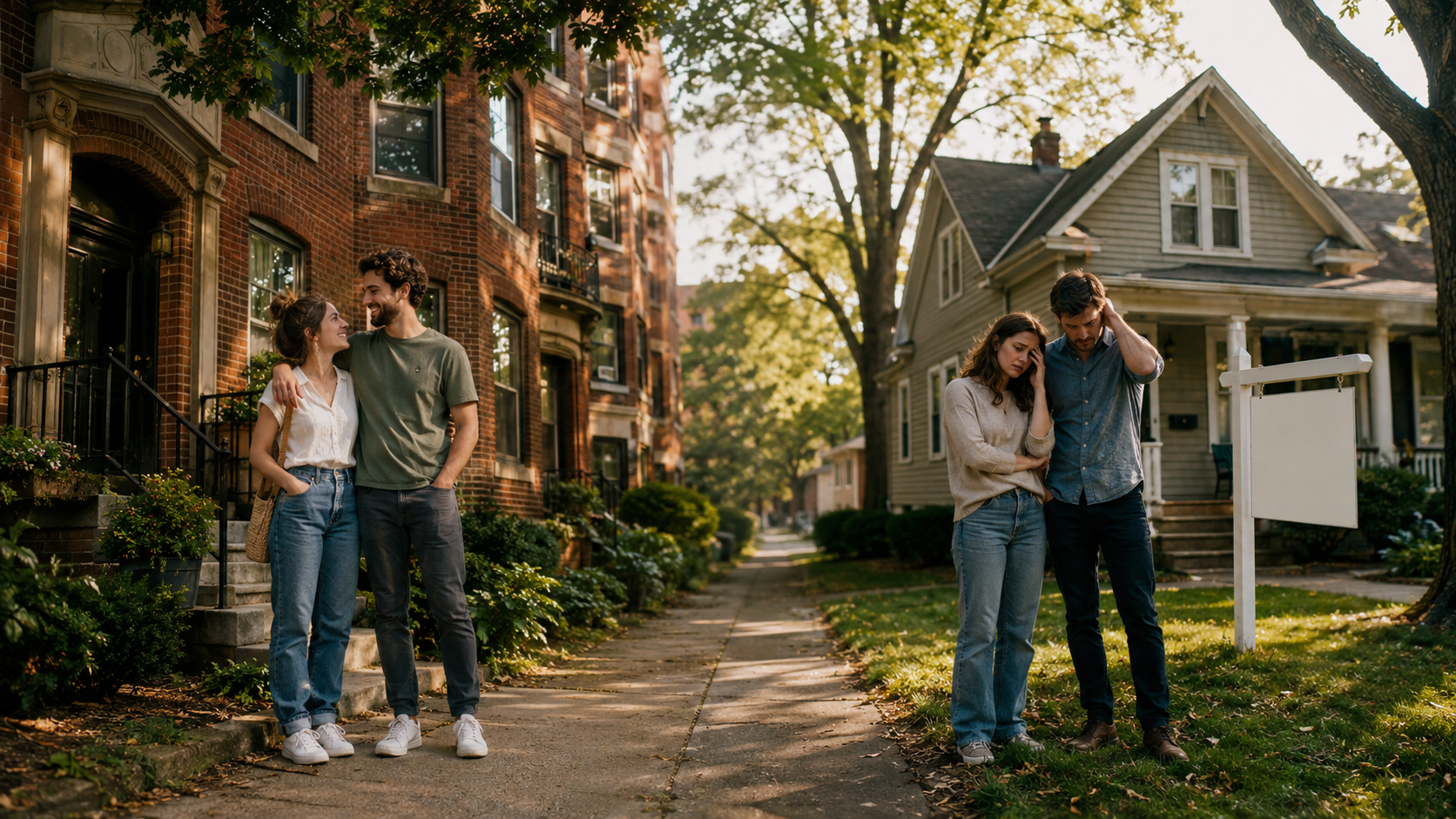
Most people searching for a Milwaukee apartment focus almost entirely on rent price and square footage. Those things matter, but the question that predicts actual satisfaction more than any other is simpler: does this neighborhood match how I actually live my life today, not how I imagine living it?
The renter who signs a lease in the Third Ward because it looks beautiful in photos and then realizes they work remotely, hate driving to get groceries, and actually just wanted a quiet street with a park nearby is going to be unhappy regardless of how nice the exposed brick looks. The renter who moves to Riverwest because it is affordable and ends up loving the community gardens and local brewery scene they had never considered before is going to stay for years.
The best Milwaukee neighborhood for you is the one that fits your actual daily routine, your real commute, your genuine social life, and your honest budget. Not the aspirational version of those things. The real ones.
Enigma Properties manages apartments across Milwaukee, Wauwatosa, Shorewood, Bay View, and West Allis. We know these neighborhoods from the inside and we are happy to have an honest conversation about which one actually fits your life before you sign anything.
How to Actually Choose the Right Milwaukee Neighborhood
Reading a guide is a start. But there are a few things worth doing in person before you commit to any Milwaukee neighborhood for a full lease term.
- Visit the neighborhood at two different times: once on a weekday evening and once on a weekend afternoon. The character, noise level, and parking situation can be dramatically different at different times.
- Walk from your potential apartment to the places you actually go regularly. Your grocery store, your gym, your commute start point. Time it. Do not trust the map estimate.
- Eat or drink somewhere local in the neighborhood before you decide. The quality and character of the immediate food and coffee options tells you a lot about who lives there and what the daily texture of life feels like.
- Ask your property manager how long tenants typically stay in the building. High turnover is a signal worth understanding before you sign.
- Check the parking situation during evening hours if you have a car. Street parking availability at 8pm on a Tuesday is the real test, not what it looks like at 10am on a Saturday when you are touring.
- Talk to someone who already lives in the neighborhood if you can. Neighbors on a front stoop, someone at a coffee shop. Local knowledge from a current resident is worth more than any guide including this one.
If you are searching for a Milwaukee apartment this summer, June and early July are when the best units across all neighborhoods come available before fall demand peaks in August. The East Side, Bay View, and Shorewood in particular see strong summer availability as leases turn over. Moving on a summer lease means you get to experience your new neighborhood at its best before committing through winter. That lived experience is genuinely worth something when you are making a multi-year housing decision.
Find Your Milwaukee Neighborhood with Enigma Properties
Enigma Properties manages well-maintained apartments across Milwaukee, Wauwatosa, Shorewood, Bay View, and West Allis. Every unit comes with 24-hour maintenance response, an online resident portal for payments and requests, and a local team that actually knows the neighborhoods they manage.
If you read this guide and have a neighborhood in mind, the next step is simple. Browse our available apartments across the Greater Milwaukee area or reach out to our team directly. We are happy to help you match the right neighborhood to the right apartment before summer availability runs out.