How to Evaluate Apartment Safety in Milwaukee: A Renter's Practical Guide
Safety is specific, not general. Two apartments on the same block can feel completely different depending on the building, the lighting, the locks, and how fast the management team responds when something breaks. Rather than judging an entire area from a distance, evaluate the actual building and the actual block: visit at different times of day, check the entry doors, locks, and lighting, ask how maintenance and after-hours issues are handled, and know what Wisconsin law already requires your landlord to do.
If you are apartment hunting in Milwaukee, safety is probably somewhere on your mind, and there is nothing wrong with that. It is one of the most common things renters research, and it deserves a straight answer rather than either a sales pitch or a scare story. The most useful thing we can tell you, after years of managing buildings across this city and its suburbs, is that safety is far more local and far more practical than most people assume. Here is how to actually evaluate it for yourself.
Start HereSafety Is About the Block and the Building, Not the City
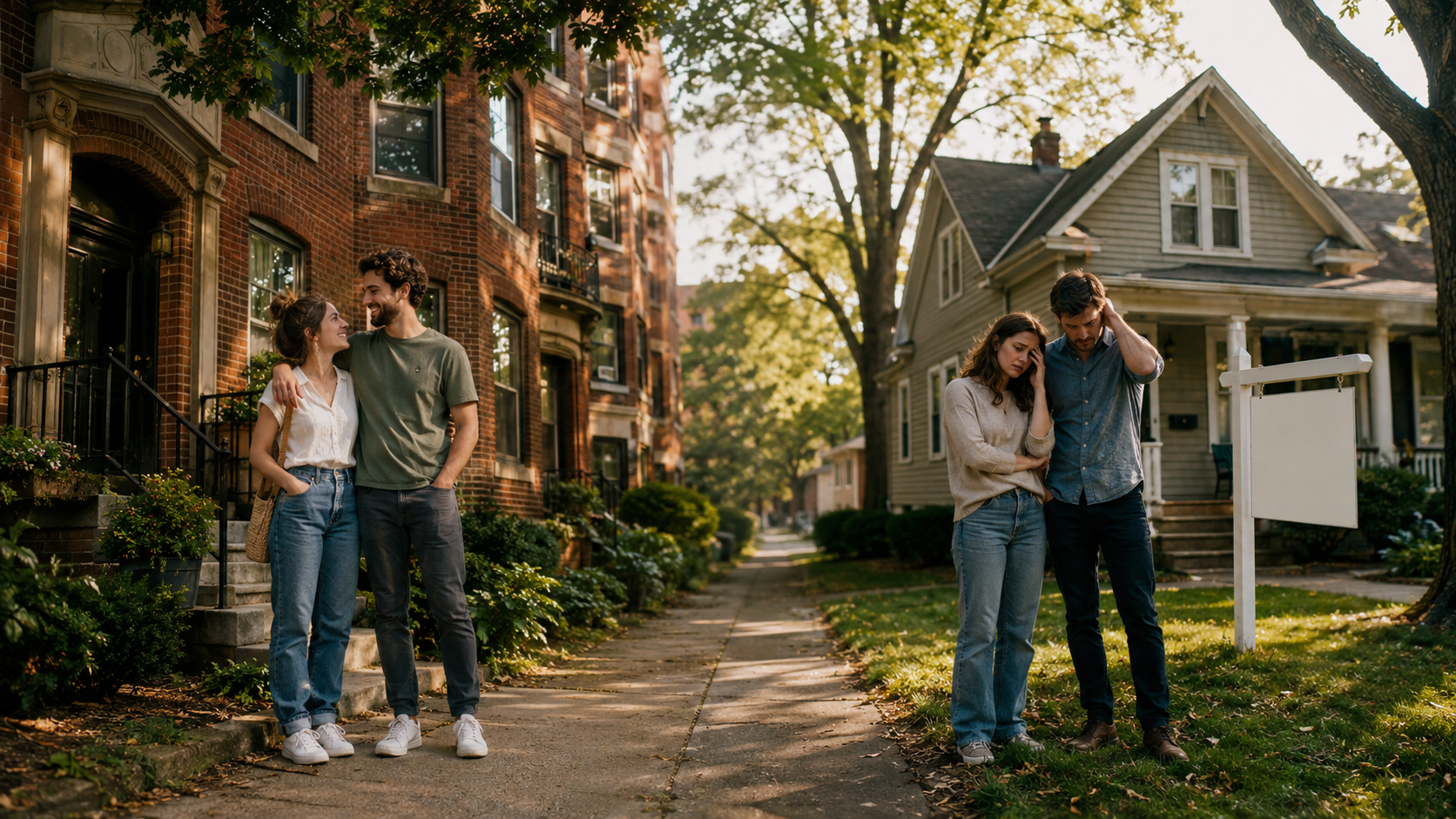
Milwaukee, like every large American city, gets discussed in broad strokes. Those broad strokes are almost useless when you are choosing one apartment. A city is not a single place, and neither is a neighborhood. Conditions vary street by street, building by building, and management company by management company.
This is why we do not hand renters a ranked list of neighborhoods. It would be misleading, it would go stale quickly, and it would tell you very little about the specific unit you are considering. What actually predicts how secure you feel day to day is much more concrete: how well the building is maintained, whether the entry door latches properly, whether the parking area and walkways are lit, whether neighbors stay for years, and whether someone answers the phone when you need them at nine on a Sunday night.
Those are all things you can check yourself before you sign anything. Let us go through them.
What MattersBuilding Features That Genuinely Matter
When you walk into a building, a handful of physical details tell you most of what you need to know. Some features get marketed heavily but mean less than people expect, so here is an honest sort.
Worth Prioritizing
- A secure main entry that actually latches and locks behind you
- Solid deadbolts on the unit door and windows that lock properly
- Good exterior lighting at entrances, walkways, and parking areas
- Well-lit, clean common areas, hallways, and stairwells
- Off-street or assigned parking, especially for winter and late shifts
- Fast, documented maintenance response from management
Matters Less Than You Think
- Marketing language like "secure building" with no specifics behind it
- A camera at the door that nobody monitors or maintains
- A gate or callbox that is routinely propped open or broken
- General area reputation, which tells you little about one address
The pattern here is simple. Features only help when they are maintained. A working deadbolt and a landlord who fixes the broken entry door within a day are worth more than an impressive-sounding amenity list attached to a building nobody takes care of.
On the TourWhat to Check When You Tour an Apartment
A showing is your best chance to gather real information, and most renters use maybe half of it. Slow down and run through this list.
- Test the locks yourself. Open and close the unit door, throw the deadbolt, and check that every window latches. Ask whether locks are rekeyed between tenants.
- Check the main entry. Does the door close and latch on its own, or does it hang open? A propped or broken entry door is the single most telling detail in any building.
- Look at lighting. Note the entrance, hallways, stairwells, laundry area, and parking. If you tour during the day, ask whether exterior lights are on timers or sensors.
- Walk the block at a different hour. Come back on a weekday evening or a weekend night. Ten minutes of your own observation beats any secondhand opinion.
- Notice the upkeep. Burned-out bulbs, broken fixtures, and long-ignored repairs in common areas tell you how quickly things get fixed inside units too.
- Ask about turnover. How long do residents typically stay? People staying for years is one of the strongest signals a building is comfortable to live in.
Our guide to the red flags every renter should look out for covers more warning signs worth catching before you sign a lease.
Do Your Own HomeworkHow to Research an Area for Yourself
You should absolutely do your own research, and you should go to primary sources rather than relying on reputation or hearsay. Here is where to look and how to read what you find.
- Go to official city and county sources for public safety data instead of aggregator sites, which often repackage old numbers into dramatic rankings.
- Look at recent time periods rather than multi-year averages, since conditions in any given area change.
- Pay attention to the scale of the data. Numbers reported for a whole city or a large district may not describe the few blocks around one address at all.
- Visit in person more than once. Your own experience of a street on a Tuesday evening is more relevant to your daily life than any statistic.
- Talk to people who live there. Neighbors on a stoop or someone at the corner coffee shop will give you a more grounded picture than anything online.
One honest caution as you research. A lot of published neighborhood rankings are built for clicks, lean heavily on old data, and flatten complex places into a single score. Treat them as a starting point for questions, not as a conclusion.
Your ProtectionsWhat Wisconsin Law Requires of Landlords
You have more protection here than most renters realize, and knowing it changes what you should expect from any building you consider. These are real requirements under Wisconsin law, not courtesies.
Your landlord must keep the property safe and in repair
Under Wisconsin Statute 704.07, a landlord must keep the portions of the property under their control in a reasonable state of repair and comply with local housing codes that keep the premises safe. That covers the things we have been talking about: entry doors, common areas, lighting, and structural upkeep. This duty is ongoing, and it cannot be waived in a lease.
Known hazards and code violations must be disclosed before you sign
Before you enter a lease or hand over a deposit, a landlord is required to disclose known building code violations and certain uncorrected conditions affecting health or safety. A landlord also may not rent out a property that has been condemned or placarded as unfit for habitation. If a building has a known problem, you are entitled to hear about it before you commit.
You cannot be punished for calling for help
This one is important and not widely known. Wisconsin law makes a rental agreement void and unenforceable if it allows a landlord to raise your rent, cut services, evict you, refuse to renew, or threaten any of those things because you contacted law enforcement or emergency services for your safety. You are allowed to call 911 when you need to. A lease cannot take that away from you.
There are also protections for tenants who are victims of crime, including specific domestic abuse protections that must be noted in leases containing crime-related rules. The state's Landlord-Tenant Guide from the Department of Agriculture, Trade and Consumer Protection lays these out in plain language and is worth bookmarking. For the broader picture, see our overview of Wisconsin tenant rights.
Ask DirectlyQuestions Worth Asking Any Property Manager
How a management company answers these tells you as much as the answers themselves. Hesitation or vagueness is its own kind of information.
- How do I submit a maintenance request, and what is your typical response time?
- What happens if something urgent breaks at night or over a weekend?
- Are locks rekeyed between residents?
- Who maintains the exterior lighting and the main entry door, and how quickly are those repaired?
- How long do residents in this building typically stay?
- Is there anything about this unit or building you are required to disclose to me?
That last question is a fair one and a good one. A trustworthy manager will answer it without flinching.
From Our ResidentsWhy Responsiveness Is a Safety Feature
People tend to think of safety as hardware, meaning locks and lights and cameras. In practice, the most reliable protection is a management team that actually shows up. Problems get fixed before they become bigger problems. Here is what that looks like in our residents' own words.
"I have lived at an Enigma property for almost a year now, and as my first apartment alone, I feel very safe and secure at the location I am at. I also appreciate the quick support that maintenance provides and all of the accommodations at my property, including onsite laundry and free storage in the basement. I'm very appreciative of Enigma for treating their residents properly."
"I am going on 2 years living with Enigma and it has been a very pleasant experience. Every maintenance request has been fulfilled properly and swiftly. Our heat went out last year and they rushed to get us all space heaters in our units while it was being fixed."
The Question Behind the Question
When renters ask us whether an area is safe, what they usually mean is something more personal. Will I feel comfortable walking to my door after a late shift? Will my car be fine overnight? If something goes wrong, will anyone actually help me?
Those are the right questions, and they have concrete answers you can gather yourself. Stand at the entrance after dark. Check whether the door latches. Ask how fast maintenance responds and then notice whether the person answering sounds like they have a real system behind them. Walk the block twice at different hours.
Fifteen minutes of that is worth more than a week of reading rankings written by people who have never set foot on the street in question.
Frequently Asked Questions
What should I look for on a tour if safety is my main concern?
Focus on the entry door and whether it latches, the quality of the deadbolts and window locks, and the lighting at entrances, stairwells, and parking. Then ask how maintenance requests and after-hours emergencies are handled, and come back to walk the block at a different time of day.
Is my landlord required to provide locks and keep the building secure?
Wisconsin Statute 704.07 requires landlords to keep the areas under their control in a reasonable state of repair and to comply with local housing codes that keep the premises safe. That duty is ongoing and cannot be waived in a lease. Report problems in writing so there is a record.
Can my landlord evict me for calling the police?
No. Wisconsin law makes a rental agreement void and unenforceable if it permits a landlord to evict you, raise your rent, reduce services, refuse to renew, or threaten those things because you contacted law enforcement or emergency services for your safety.
Does my landlord have to tell me about problems with the building?
Yes. Landlords must disclose known building code violations and certain uncorrected conditions affecting health or safety before you enter a lease or pay a deposit, and they cannot rent a property that has been condemned as unfit for habitation.
Are online neighborhood safety rankings reliable?
Treat them cautiously. Many are built on dated figures, cover areas far larger than the few blocks around a specific address, and compress complicated places into a single score. Use official city and county sources, look at recent periods, and prioritize your own in-person visits.
Does renters insurance cover theft?
A standard renters policy typically covers your belongings against theft, subject to your limits and deductible, and it also provides liability coverage. For a full breakdown of what is and is not included, see our guide to renters insurance in Wisconsin.
Securing your belongings is the other half of this conversation. Our guide to renters insurance in Wisconsin covers what a policy protects and what it costs, and our Wisconsin security deposit guide explains documenting your unit's condition at move-in, which protects you later.
This guide is general information for Wisconsin renters and is not legal advice. Laws change and local ordinances vary, so review your lease, consult the official state resources linked above, or speak with an attorney about your specific situation. Enigma Properties complies with all fair housing laws and does not steer renters toward or away from any neighborhood.
Renting With a Team That Answers the Phone
The most practical thing any renter can do about safety is choose a well-maintained building managed by people who respond quickly. Everything else follows from that.
Enigma Properties manages apartments across Milwaukee, Wauwatosa, Shorewood, West Allis, and the greater metro area, with maintenance that shows up and a team that communicates. Come see a unit, ask us every question on this list, and judge for yourself.